

CHICAGO — Demand for convenient, flavor-forward foods and beverages continues to grow, with popping boba proving to be an attractive, easy approach to adding a new experience to menus. Retail packaged products containing popping boba also are now showing up on shelf due to ingredient suppliers investing in technologies to create different types of boba balls that can withstand food and beverage manufacturing.
Popping boba is not to be confused with the chewy tapioca bobas — also called pearls — used in bubble tea. Popping boba consists of a thin, durable membrane that encases a liquid center. Upon biting, the popping boba bursts, releasing a splash of flavor along with a unique texture. The membrane can vary in composition, creating different mouthfeels, as well as flavor. There’s no limit to the flavor of the center and there’s opportunity to play around with color. Popping boba range in diameter from 5 millimeters to 10 millimeters, presenting opportunities for all types of applications.
“Popping boba is a very easy ingredient to add to menus, especially beverages, from dirty sodas to iced coffees to refreshers,” said Nils Schaede, director of marketing, Zentis North America LLC, Plymouth, Ind. “They are easy to handle and don’t require a lot of counter space. They are typically shelf stable, with refrigeration extending shelf life.”
Supported by viral social media exposure, popping boba is expanding beyond bubble tea cafes. It is served as a topping on ice cream and baked desserts. Popping boba sits at just 2% menu penetration but has grown 69% over the past four years, according to the market researcher Datassential, Chicago.
“That’s whitespace, not a tapped-out trend,” said Whitney Beem, marketing director, Parker Products, Fort Worth, Texas. “Consumers are chasing texture right now as much as flavor, and boba delivers a pop and chew experience like nothing else on the menu.”
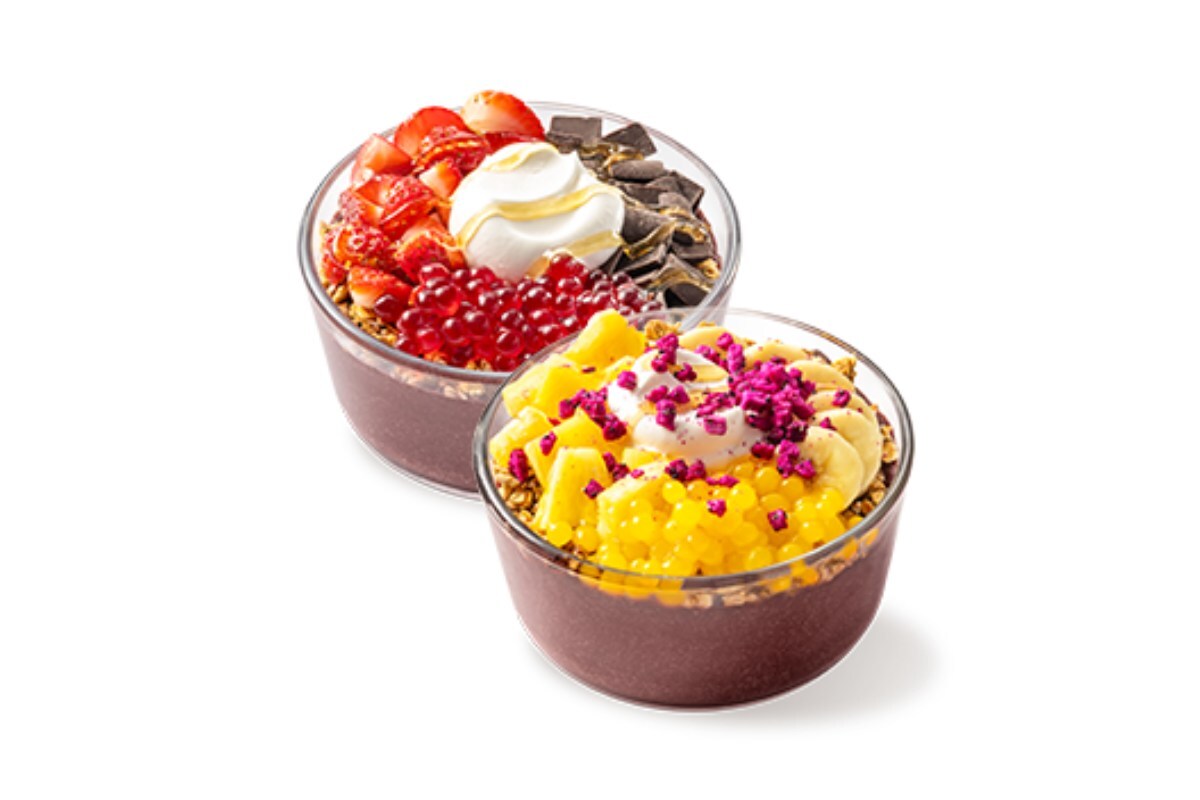
Tropical Smoothie Café’s Tropiboba Bowls are a limited-time offering that invites consumers to top their acai bowls with popping boba.
McDonald’s Corp. had a mango pineapple refresher on its summer beverage menu. The item featured a blend of tropical mango and pineapple flavors with a lemonade base and strawberry popping boba.

Popping boba sits at just 2% menu penetration but has grown 69% over the past four years, according to the market researcher Datassential.
| Photo: Tropical Smoothie Cafe“Popping boba isn’t just for beverages,” said Tara Gonzales, director of marketing, Pecan Deluxe Candy Co., Dallas. “It’s a versatile ingredient that works across sweet and savory. Think mango popping boba on aji tacos or vanilla boba topping off a creamy flan.”
Shoppers who have discovered boba on restaurant menus are now looking for it elsewhere and brands are starting to deliver.
“The barrier to boba on shelf has always been supply, as most boba was imported, with unpredictable lead times,” Beem said.
Earlier this year, iÖGO, St. Hubert, Quebec, Canada, introduced Nanö Bubbles Yogurt for kids. The 100-gram single-serve cups came in three varieties, all formulated with fruit blended with popping bobas.
New York-based Core Home markets Bubluv Bubble Tea, a ready-to-drink, better-for-you boba tea that boasts no added sugar, no artificial ingredients and less than 50 calories per 9.5-oz bottle.
BobaVida, Mount Vernon, Mo., markets shelf-stable cups and pouches of popping boba under the ICEE brand, inviting consumers to get creative in their kitchens. There are sweet fruity options, such as cherry and blue raspberry. Sour offerings include green apple and lemon lime.
“We are seeing growing interest in globally inspired and elevated flavors like yuzu, hibiscus and passionfruit, along with crossover concepts like swicy and cocktail inspired profiles,” Gonzales said.




 English