

THOMASVILLE, GA. — Intensifying economic pressures, changing consumer preferences and stiffer competition translated into weaker second-quarter results at Flowers Foods, Inc. than the company had anticipated. Particular pressure on the company’s loaf bread business, including its Wonder and Dave’s Killer Bread brands, contributed to decreases in sales and profits during the period.
The setback in the second quarter has prompted Flowers to take additional cost-reduction efforts while accelerating growth initiatives. Sales and earnings guidance for the current year were lowered.
Net income in the second quarter ended July 18 totaled $40.66 million, equal to 19¢ per share on the common stock, down 30%, from $58.37 million, or 28¢ per share, in the second quarter of 2025. Sales were $1.19 billion, down 4% from $1.24 billion a year earlier. The sales decrease marked a reversal from the company’s first quarter, when Flowers Foods generated an increase of 1.1% in sales.
In the second quarter, volume dropped 5.8% while pricing/mix were up 1.8%.
A. Ryals McMullian, chairman and chief executive officer, pinpointed soft demand for bread as the key to the weak financial results, reflecting “ongoing pressure on household budgets, evolving consumer purchasing behavior, and continued competitive dynamics.”
The competitive dynamics were responsible for a “more difficult operating environment” than Flowers had anticipated, McMullian said.
“While we expected many of these headwinds to persist, their pace and magnitude intensified during the quarter, contributing to softer demand across much of our portfolio and results that fell short of our expectations,” he said.
Economic weakness prompted consumers to trade down to more affordable options as well as toward formats where Flowers is still building scale, McMullian said.
“Those shifts were compounded by consistent promotional intensity and strong competition across pricing and assortment,” he said.
Flowers is accelerating initiatives to strengthen competitiveness, improve execution, advance innovation, and prioritize the highest-value opportunities, McMullian said. He said the efforts already are generating “tangible commercial momentum.”
“Recent progress includes new business wins, entry into new markets, and key wins in away-from-home and cake categories, which we expect to contribute meaningfully to sales as those opportunities fully ramp,” he said.
The effects of the consumer and competitive pressures McMullian cited were particularly pronounced in the loaf bread category, including the company’s major Nature’s Own and Wonder brands. In the case of Nature’s Own, mainline product sales were weak, but the brand overall benefited from strength in its Perfectly Crafted sub-brand, with sales rising more than 9%. McMullian described new sourdough and Italian herb varieties as growth drivers.
The relaunch of Nature’s Own, reformulated with fewer ingredients and without flour enrichment, was described by McMullian as a “a key step” in the company’s efforts to revitalize its bread business. The move was announced midway through the second quarter.
“Early feedback from customers and distribution partners has been excellent, particularly around the brand’s simpler ingredients, stronger better-for-you positioning, and Non-GMO Project verified offering at national scale,” McMullian said. “While this initiative remains in its early stages and has not yet meaningfully contributed to results, positive customer feedback and the brand’s growing presence in the better-for-you segment reinforce our confidence in Nature’s Own’s ability to extend its category leadership over time.”
To achieve success for the relaunch, McMullian said Flowers is focused on building awareness, securing displays, improving shelf communication, and supporting the brand across the full path to purchase.”
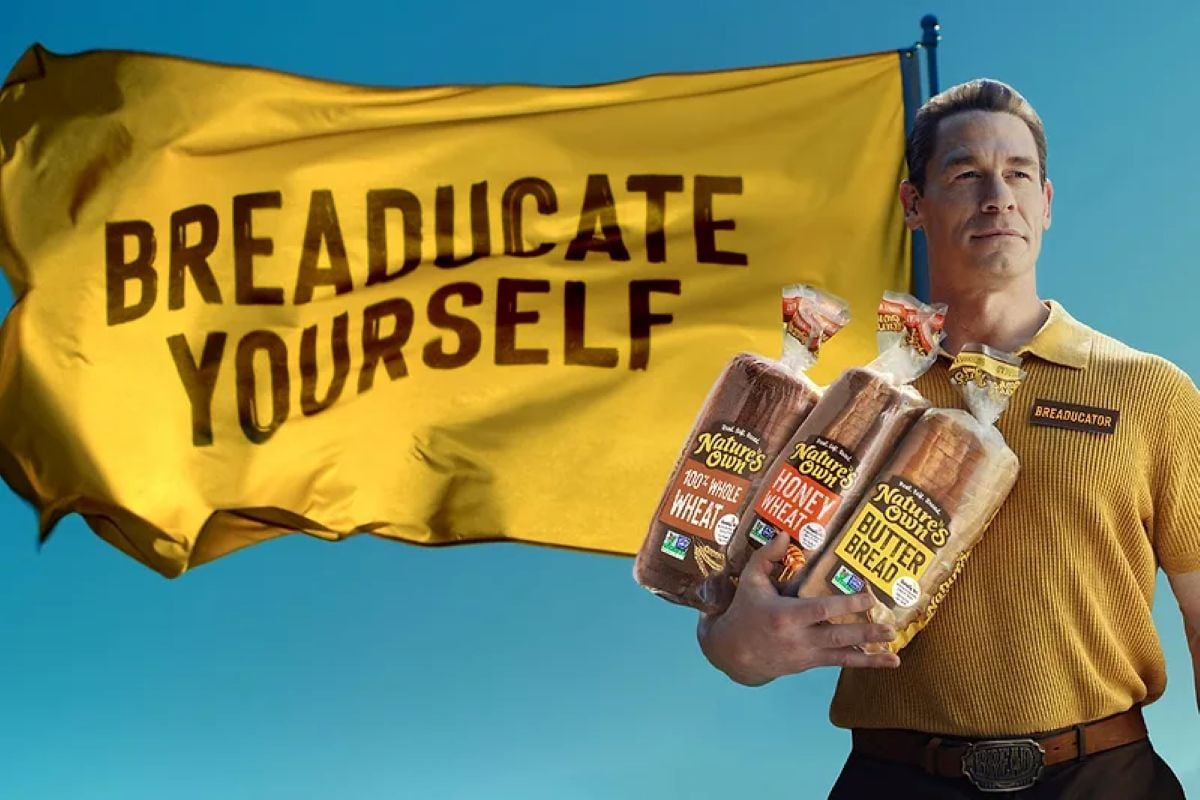
He said the marketing campaign associated with the launch featuring spokesperson John Cena has begun to “generate stronger consumer engagement and positive social media feedback.”
While citing Nature’s Own as brand with Wonder that was pressured during the quarter, McMullian later said the Nature’s Own brand “performed very well, gaining 30 basis points of dollar share and 20 basis points of unit share.”
“Nature’s Own Perfectly Crafted was the primary driver and continued to build momentum, increasing dollar sales and gaining 20 basis points of unit share in the quarter, helping offset some of the pressure on our overall performance in the category,” McMullian said. “During the July Fourth holiday period, we held unit share and grew dollar share during this important seasonal window.”
By contrast, Dave’s Killer Bread lost unit and dollar share during the quarter. McMullian attributed the performance to planned reductions in marketing spending, changing consumer preferences, intensifying competition and consumer price sensitivity. He said Flowers is working to improve performance through innovation, expanded distribution, and advertising.
During an analyst call Aug. 21, McMullian said marketing dollars redirected from core Dave’s Killer Bread products are shifting back.
“We should see more normalized levels of promo and marketing spend with DKB for the balance of the year,” he said.
Asked about the consumer shifts weighing on DKB, McMullian cited one product in particular.
“We think that it’s the growth of sourdough,” he said. “It’s pretty remarkable, actually. I mean that subsegment of the category has already grown to be a $1.3 billion subcategory, pretty tremendous growth. In DKB, we only have sourdough on the West Coast currently.”
Price sensitivity also factored into the results, he said.
“But I said earlier, I don’t think it’s all price,” he said. “It’s a combination of price for some consumers, but also offering and product attributes that are driving some of that decline.”
Canyon Bakehouse, the company’s gluten-free bread brand, gained both unit and dollar share, and Nature’s Own Keto gained dollar share during the quarter. In the company’s better-for-you snacking business, McMullian said Simple Mills retail sales increased 13%, driven by strength in cookies and crackers, reinforcing the resilience and appeal of the brand.

The marketing campaign associated with the launch featuring spokesperson John Cena has begun to “generate stronger consumer engagement and positive social media feedback,” said A. Ryals McMullian, chairman and chief executive officer.
| Photo: Flowers Foods, Inc.“This performance was driven by a combination of distribution expansion, ecommerce performance, and strong velocities on core lines in the food and mass channels,” McMullian said, noting that new product launches have exceeded distribution goals, fueling optimism that the brand’s growth will accelerate in the second half of 2026.
Amid rumors the company’s Tastykake business may be sold, McMullian said the company “generally held share” in the snack cake category, thanks to strong results from the company’s Wonder brand.
“Wonder cake was a clear standout, gaining 60 basis points of unit share while also growing dollar share, underscoring the brand’s strong consumer relevance and the important role our cake business can play within our broader portfolio,” McMullian said. “Wonder’s continued momentum gives us a strong foundation from which to build in this category.”
Speculation about the sale of Tastykake was not addressed either in McMullian’s remarks or during the analyst call.
Asked whether pricing Flowers took earlier in the year was responsible for the downturn in sales, McMullian again said other factors may have been more important.
“Under-penetration in half loafs, sourdough, protein, fiber, some of these more functional attributes that consumers are looking for —that’s where our primary focus is,” he said. “Which is not to say that we’re ignoring the price equation. We are taking a hard look at that, and my initial thesis is there probably are some pockets of the portfolio where that’s a factor. But I don’t think it’s the overall driving force of our performance.”
Flowers trimmed the company’s earnings per share guidance for 2026 to 75¢ to 80¢from its earlier guidance of 80¢ to 90¢ and compared with $1.09 in 2025. The company revised its sales forecast to $5.07 billion to $5.142 billion, down from earlier guidance of $5.163 billion to $5.267 billion, and down 2.2% to 3.5% from 2026.
“Given our first-half performance and the current category environment, we are updating our full-year outlook to reflect a more cautious view for the balance of 2026,” McMullian said. “While near-term conditions remain challenging, we are confident that the actions underway will strengthen our top-line trajectory and better position our portfolio to meet evolving consumer demand.”
“We are taking targeted steps to strengthen competitiveness, sharpen execution, reduce costs, and better align resources with the opportunities that can create the greatest long-term value,” McMullian said. “Consistent with these priorities, we are executing additional cost actions designed to improve efficiency, reduce our cost base, and better align our operating structure with customer needs and current market realities. While difficult, we expect these actions to create a more agile organization and better position Flowers for profitable growth over time.”
Embedded in the outlook is improvements Flowers expects from its Nature’s Own relaunch, said Anthony Scaglione, chief financial officer.
“Additionally, it reflects the actions we are taking to improve performance, including cost controls, reorganization savings, targeted brand investment, innovation launches, and related execution,” Scaglione said.
The cost controls are expected to generate annualized savings over time of $20 million, including $9 million in 2026, but also will result in $6 million in one-time costs, Scaglione said.
Flowers sees longer-term headwinds for 2027, including escalating commodity ingredient and fuel costs, Scaglione said. He said the company is fully hedged for 2026 for its principal ingredients.
“We remain vigilant in implementing actions to help mitigate some of this risk, including expanding our hedging program and improving our price-pack architecture to better align with consumer preferences,” he said. “This work will lead to more stabilized cost inputs from a planning standpoint as well as opportunities to offer our best-selling brands in smaller loaf sizes and ensure our snack packs are appropriately sized for consumer demand.”



 English