


Recap for November 20
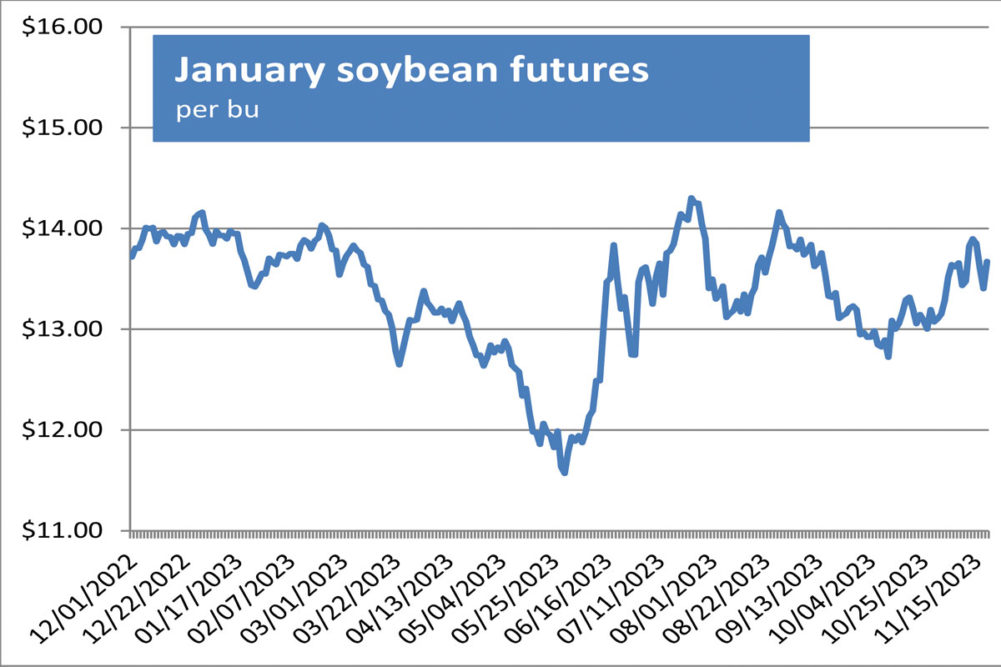
- Boosted by scorching conditions and weekend rains in Brazil and the results of the Argentina presidential election, US soybean futures rose 2% on Monday. Brazil’s weather situation and confirmed export sales to Mexico sent corn futures higher. Expectations the USDA would leave unchanged its weekly condition ratings for US winter wheat, which was off to its best start in years, weighed on wheat futures Monday, sending Chicago and Kansas City futures to contract lows. After the close, the USDA said winter wheat rated good-to-excellent was up one percentage point from a week earlier. December corn futures added 2½¢ to close at $4.69½ per bu. Chicago December wheat fell 7¼¢ to close at $5.43½ per bu. Kansas City December wheat declined 7½¢ to close at $6.10½ per bu. Minneapolis December wheat fell 8¼¢ to close at $7.07¼ per bu. January soybeans jumped 27¢ to close at $13.67¼ per bu. December soybean meal added $6.90 to close at $460.20 per ton. December soybean oil added 1.10¢ to close at 53.11¢ a lb.
- US equity markets closed higher Monday, boosted by shares of technology companies working on artificial intelligence, such as Microsoft and Nvidia. The Dow Jones Industrial Average added 203.76 points, or 0.58%, to close at 35,151.04. The Standard & Poor’s 500 added 33.36 points, or 0.74%. The Nasdaq Composite ascended 159.05 points, or 1.13%, to close at 14,284.53.
- US crude oil prices were higher Monday. The expiring December West Texas Intermediate light, sweet crude future was up $1.71 at $77.60 per barrel, and the January contract was up $1.79 to close at $77.83 per barrel.
- The US dollar index closed lower Monday for the sixth time in seven trading days.
- US gold futures eased; the December contract down $4.40 to close at $1,980.30 per oz.
Recap for November 17
- The prospect of rain in drought-stricken Brazil weighed on grain and oilseed futures Friday as traders exited long positions heading into a shortened Thanksgiving trading week. Soybeans and corn dropped more than 1%. Wheat prices were near September’s three-year low of $5.40 as Russia continued to export huge amounts of cheap grain as it wrapped up a second consecutive bumper crop. December corn futures fell 7¾¢ to close at $4.67 per bu. Chicago December wheat dropped 2¾¢ to close at $5.50¾ per bu. Kansas City December wheat declined 9¼¢ to close at $6.18 per bu. Minneapolis December wheat fell 10½¢ to close at $7.15½ per bu. January soybeans dropped back 20¢ to close at $13.40¼ per bu. December soybean meal eased $13.50 to close at $453.30 per ton. December soybean oil added 0.38¢ to close at 52.01¢ a lb.
- US equity markets closed higher for a third straight week Friday, indicating US investors had regained their appetite for risk three days after a cooler-than-expected inflation report indicated a soft landing might be in store versus a steep recession. The Dow Jones Industrial Average edged up 1.81 points, or 0.01%, to close at 34,947.28. The Standard & Poor’s 500 added 5.78 points, or 0.13%, to close at 4,514.02, for a 2.2% weekly gain. The Nasdaq Composite ascended 11.81 points, or 0.08%, to close at 14,125.48.
- US crude oil prices were higher Friday. The December West Texas Intermediate light, sweet crude future was up $2.99 at $75.89 per barrel.
- The US dollar index closed lower Friday for the fifth time in six trading days.
- US gold futures eased despite the downturned dollar. The December contract fell $2.60 to close at $1,984.70 per oz.
Recap for November 16
- Rainy Brazilian forecasts and the possibility of downpours that could offset the export competitor’s recent hot, dry weather weighed on soybean futures Thursday. Corn dipped early in the session but closed slightly higher. Wheat futures were lower, down 1.25% to two-week lows in the case of Chicago soft red winter wheat, on weak demand. December corn futures added 4¢ to close at $4.74¾ per bu. Chicago December wheat dropped 7¢ to close at $5.53½ per bu. Kansas City December wheat dropped 12½¢ to close at $6.27¼ per bu. Minneapolis December wheat fell 9¼¢ to close at $7.26 per bu. January soybeans tumbled 24¾¢ to close at $13.60¼ per bu. December soybean meal eased $2.40 to close at $466.80 per ton. December soybean oil lost 1.42¢ to close at 51.63¢ a lb.
- US equity markets were mixed, the S&P 500 and Nasdaq edging higher while the DJIA dipped under pressure from earnings selloffs on such shares as Cisco Systems and Walmart. The Dow Jones Industrial Average dropped 45.74 points, or 0.13%, to close at 34,945.47. The Standard & Poor’s 500 edged up 5.36 points, or 0.12%, to close at 4,508.24. The Nasdaq Composite edged up 9.84 points, or 0.07%, to close at 14,113.67.
- US crude oil prices were lower Thursday. The December West Texas Intermediate light, sweet crude future was down $3.76 at $72.90 per barrel.
- The US dollar index reverted to its recent downside slide Thursday after a one-day reprieve Wednesday.
- US gold futures jumped as the dollar dipped Thursday. The December contract added $23 to close at $1,987.30 per oz.
Recap for November 15
- Soybean futures fell back Wednesday after touching the highest levels since August a day earlier. Pressure came from an improved Brazilian weather outlook that boosted supply prospects and overshadowed demand from record US soybean crushings in October. Brazil’s rain forecasts also depressed US corn futures, offsetting support from signs of good export demand for US supplies. US wheat futures were mostly lower alongside declining European wheat futures after France’s agriculture department increased its forecasts for soft wheat exports and wheat ending stocks. December corn futures slumped 7½¢ to close at $4.70¾ per bu. Chicago December wheat dropped 11½¢ to close at $5.60½ per bu. Kansas City December wheat closed unchanged at $6.39¾ per bu, but later months declined in a 3¢ range. Minneapolis December wheat eased ¾¢ to close at $7.35¼ per bu. January soybeans dipped 4¾¢ to close at $13.85 per bu; August 2024 was steady, but September and beyond edged higher. December soybean meal shed $4.40 to close at $469.20 per ton. December soybean oil rose 0.30¢ to close at 53.05¢ a lb.
- Further evidence that the economy was cooling at a gradual pace boosted US equity markets for a second day on Wednesday. A Labor Department report indicated producer prices fell 0.5% in October from the previous month, the largest single-month decline since April 2020. Retail sales fell 0.1% over the same period, the first decline since March. The Dow Jones Industrial Average added 163.51 points, or 0.47% to close at 34,991.21. The Standard & Poor’s 500 edged up 7.18 points, or 0.16%, to close at 4,502.88. The Nasdaq Composite edged up 9.45 points, or 0.07%, to close at 14,103.84.
- US crude oil prices were lower Wednesday. The December West Texas Intermediate light, sweet crude future was down $1.60 at $76.66 per barrel while the January contract fell $1.38 to close at $76.79.
- After a four-day downslide, the US dollar index posted a higher close Wednesday.
- US gold futures dropped alongside a newly ascendant dollar Wednesday. The December contract lost $2.20 to close at $1,964.30 per oz.
Recap for November 14
- US soymeal futures rallied to contract highs Tuesday, helping soybean futures pop to their highest price since August on concerns about unfavorable crop weather in top supplier Brazil, which also helped corn futures close higher. Wheat futures were mixed, spring wheat higher while winter wheat contracts declined despite an unexpected decline in crop conditions a day earlier. December corn futures added 1¢ to close at $4.78¼ per bu. Chicago December wheat fell 7¢ to close at $5.72 per bu. Kansas City December wheat dropped 1¾¢ to close at $6.39¾ per bu. Minneapolis December wheat added 5¾¢ to close at $7.34½ per bu. January soybeans edged up ¾¢ to close at $13.68¾ per bu. December soybean meal added $4.50 to close at $473.60 per ton; the May contract and beyond were lower. December soybean oil rose 1.21¢ to close at 52.75¢ a lb.
- Inflation cooled more than expected, according to a Labor Department report today, fueling ideas the Federal Reserve will end its historic rate-raising campaign and igniting big gains in stocks and government bonds Tuesday. The report indicated consumer prices overall were flat last month and rose 3.2% from a year earlier, slower than in September. Increases in core prices, which exclude volatile food and energy items, also continued cooling, indicating underlying price pressures are dying down. Core inflation for the five months ended in October was at a 2.8% annual rate, down from 5.1% during the first five months of the year. Overall inflation peaked at 9.1% in June 2022. The Dow Jones Industrial Average soared 489.83 points higher, or 1.43%, to close at 34,827.70. The Standard & Poor’s 500 added 84.15 points, or 1.91%, to close at 4,495.70. The Nasdaq Composite jumped 326.64 points, or 2.37%, to close at 14,094.38.
- US crude oil prices were unchanged to higher Tuesday. The December West Texas Intermediate light, sweet crude future was steady at $78.26 per barrel while the January contract eased 2¢ to close at $78.17.
- The US dollar index was lower Tuesday for a fourth consecutive day.
- US gold futures continued higher Tuesday. The December contract gained $16.30 to close at $1,966.50 per oz.
| Fresh ideas. Served daily. Subscribe to Food Business News’ free newsletters to stay up to date about the latest food and beverage news. |
Subscribe |




 English