

MINNEAPOLIS — Jeffrey Harmening, chairman and chief executive officer of General Mills Inc., said the food company is “off to an encouraging start in fiscal ’27,” as top-line results in the first quarter built on momentum in latter part of fiscal 2026.
“Our ‘remarkability’ playbook is working, driving improved top-line performance by delivering stronger product innovation and renovation focused on the benefits consumers are looking for today,” Harmening said in reporting quarterly results on Sept. 23. “And we have more work to do.”
For the quarter ended Aug. 30, net income fell 67% to $397 million, equal to 74¢ per share on the common stock, from $1.2 billion, or $2.22 per share, a year earlier. General Mills attributed the decrease primarily to lower operating profit.
Excluding a valuation loss on held-for-sale business, transaction and acquisition integration costs, asset impairments, and restructuring and transformation charges, among other items, adjusted net earnings fell 14% to $403.6 million, or 75¢ per share, from $469 million, or 86¢ per share, a year ago. The result topped Wall Street’s average estimate for adjusted earnings per share of 72¢.
Operating profit dropped 63% to $633.6 million and on an adjusted basis was down 11% to $634 million. General Mills said the decrease mainly reflects a year-ago $1 billion gain from the divestiture of its yogurt business a year ago, along with lower gross profit dollars this fiscal year.
“We’re continuing to deliver industry-leading cost savings in a volatile environment,” Harmening noted. “We are on track to deliver $750 million in savings this year between our holistic margin management program, our transformation initiative and other efficiency efforts. This work is about more than cost mitigation and reduction. It’s about making General Mills future-fit, modernizing how we operate, reimagining our supply chain and building the flexibility to innovate faster.”
First-quarter net sales totaled $4.39 billion, down 3% from $4.52 billion a year earlier. General Mills said the decline came primarily from the impact of the US yogurt divestiture, while “organic net sales essentially matched year-ago levels.” Organically, net sales in the 2027 quarter were flat, including a 1% decrease in volume.
“In terms of first-quarter performance, organic net sales were flat to last year, adjusted operating profit was down 11% and adjusted diluted EPS was down 13%,” Harmening said. “These results finished ahead of our expectations, driven largely by improved retail sales trends in North America Retail, North America Foodservice and International, as well as a good start on our cost savings programs.”
Dana McNabb, chief operating officer, noted that General Mills “entered fiscal ’27 with a stronger foundation,” citing “decisive action we took last year to bring more value to consumers by adjusting base prices to address key price cliffs and gaps.”

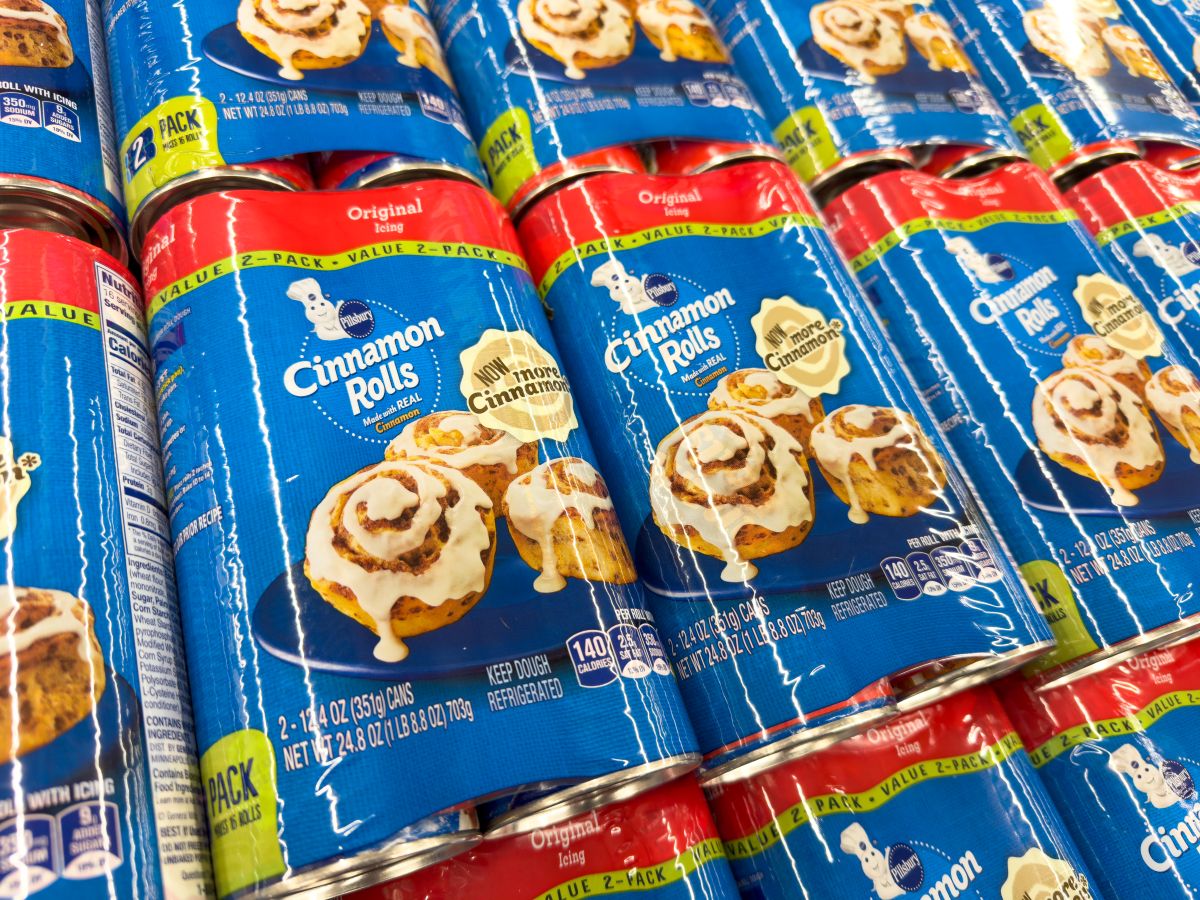
Brands such as Pillsbury, Cheerios and Annie’s have seen more innovation and renovation this year, General Mills said.
| Photo: ©JAMMER GENE – STOCK.ADOBE.COM“With that investment behind us, our full focus this year is on accelerating our pace of product innovation and renovation to deliver more of the lasting benefits that consumers are looking for today,” she said. “This includes more protein and fiber, clean labels, bold flavors, fun and indulgence, and pet humanization. And we’ll leverage our strategic revenue management toolkit to strengthen price/mix, with a particular focus on mix. I’m encouraged by the early signs of progress we’re seeing in Q1, driven by our focus on Remarkability, and it is evident in the results we delivered this quarter in North America Retail (NAR).”
For the core NAR unit, first-quarter net sales fell 7% to $2.45 billion from $2.63 billion, reflecting a 4-point headwind from the sale of the US yogurt business. Organic net sales were down 3% on decreases of 2% in volume and 1% in price/mix. Segment operating profit declined 15% to $478.6 million.
General Mills said NAR’s performance included year-over-year net sales decreases of 14% for the Big G Cereal & Canada business unit (reflecting the impact of the yogurt divestitures) and 6% for US Snacks, while sales came in flat for US Meals & Baking Solutions. The company said that, “as expected,” organic sales lagged Nielsen-measured retail sales by about 1 point, pointing to changes in retailer inventory, but noted that dollar share trends strengthened in most of its priority categories.
“NAR retail sales improved by roughly 2 points versus fiscal ’26, as we made our products and brand communications stand out more for consumers,” McNabb said. “We’ve increased the contributions from innovation and renovation in NAR this year, with core brands like Cheerios, Annie’s and Pillsbury and new brands like La Tiara and Wanchai Ferry. We’ve also stepped up our marketing game, bringing in new agency partners, building a next-generation content studio and doubling our use of influencers to maximize our reach and engagement.
“And we have further to go,” she said. “While most of NAR’s priority businesses delivered improved market share trends in Q1, some are not yet back to absolute share growth, and we’re focused on improving this trajectory.”
Quarterly net sales rose 1% to $523.1 million for the North America Foodservice unit and climbed 4% to $794.3 million for International. North America Pet sales were flat at $612.8 million. Operating profit rose 12% for Foodservice and 14% for International but sank 12% for Pet.
“With solid first-quarter results, improving in-market momentum, and our transformation and cost savings work on track, we are reaffirming our full-year fiscal ‘27 guidance,” Harmening said.
For fiscal 2027, General Mills forecasts adjusted EPS of $3 to $3.20, organic net sales of down 1.5% to up 0.5%, and an adjusted operating profit decline of 8% to 13%.



 English